

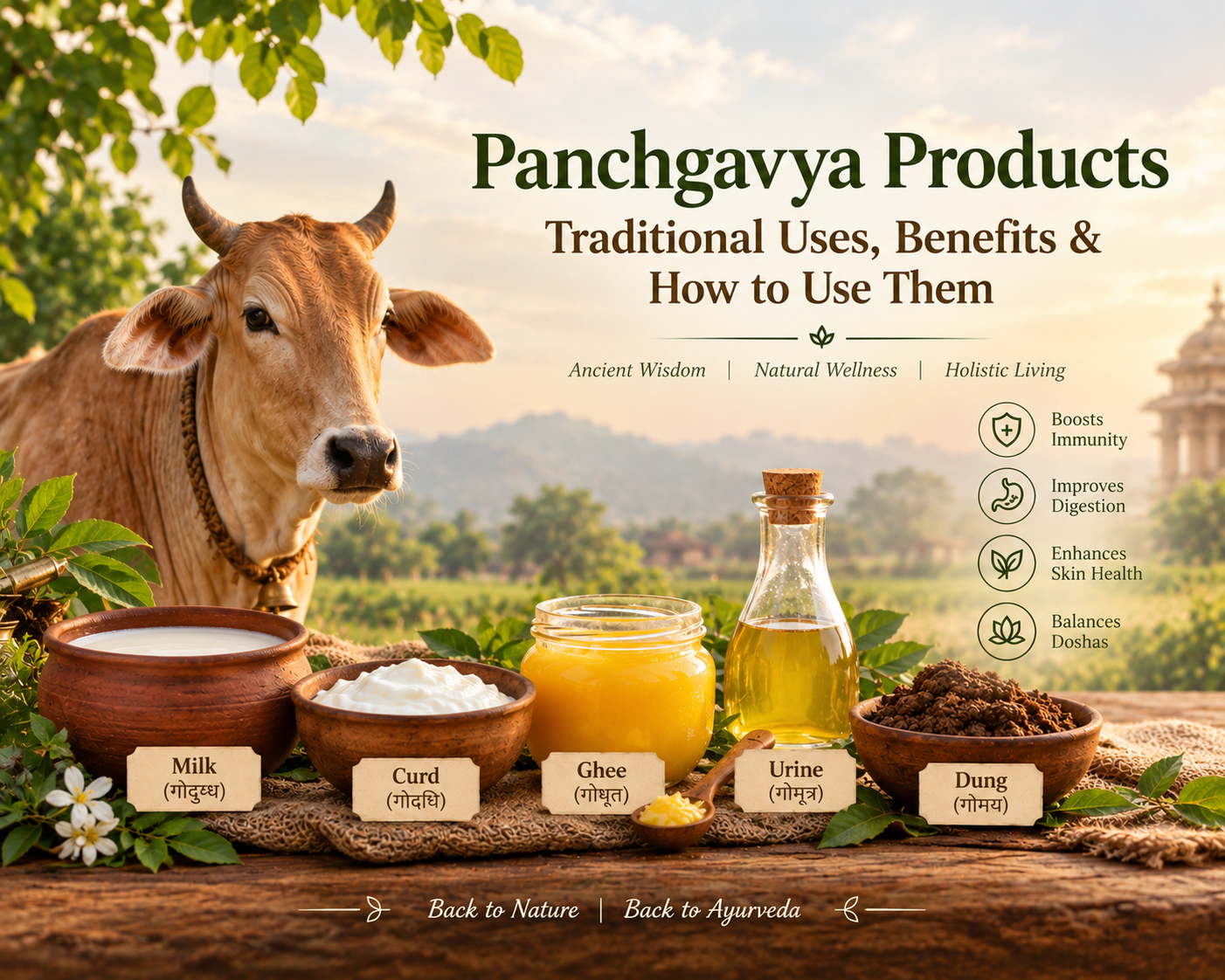
Panchgavya Products: Traditional Uses, Benefits & How to Use Them
Ayurveda is a traditional system of wellness that emphasizes natural ingredients, balanced living, and personalized approaches to health. Among its many traditional concepts, Panchgavya occupies a unique place. The term Panchgavya refers to five substances derived from cows, commonly used in Indian practices: milk, curd, ghee, urine, and dung.
For centuries, these substances have been linked to traditional Ayurvedic practices, agriculture, cultural rituals, and household wellness. Today, interest in Panchgavya products persists among those seeking to understand traditional natural wellness approaches.
This article explores the traditional significance of Panchgavya, its five components, common uses, and important considerations for responsible use.
What Is Panchgavya?
The word "Panchgavya" is derived from two Sanskrit terms: Pancha, meaning five, and Gavya, referring to substances obtained from the cow. Traditionally, Panchgavya consists of:
1. Cow Milk (Godugdha)
Cow milk has traditionally been valued for its nourishing properties and is used in various Ayurvedic preparations. It is commonly included in diets and traditional formulations.
2. Cow Curd (Dadhip)
Curd is a fermented dairy product containing beneficial microorganisms. Traditionally, it has been included in meals and Ayurvedic dietary practices to aid digestion.
3. Cow Ghee (Goghrita)
Ghee is clarified butter, traditionally used in Indian cooking and Ayurveda. It is also used as a carrier, or anupana, for certain traditional preparations.
4. Cow Urine (Gomutra)
Gomutra has a long history of use in certain traditional Ayurvedic practices. Products intended for consumption should be appropriately processed and sourced from reliable manufacturers.
5. Cow Dung (Gomaya)
Cow dung has traditionally been used in agriculture, for fuel, and in household practices. Hygiene and appropriate processing are especially important when handling such materials.
Together, these five substances form the traditional foundation of Panchgavya therapy and related practices.
Traditional Benefits of Panchgavya
The traditional understanding of Panchgavya is closely tied to holistic wellness rather than isolated health benefits. Each component has its own traditional applications.
Supporting Traditional Wellness Practices
Milk and ghee are valued in traditional Indian diets for their nutritional properties. Ghee, in particular, has been used in Ayurveda as part of various formulations and dietary practices.
Digestive Wellness
Curd has traditionally been consumed as part of Indian meals. Fermented dairy products, like curd, are often associated with gut and digestive wellness due to their live cultures.
However, individual tolerance to dairy varies, and those with lactose intolerance or dairy allergies should consider suitable alternatives.
Traditional Skin and External Care
Ghee has traditionally been used for moisturizing and soothing dry skin. Some Panchgavya-based preparations are also used externally in traditional practices.
However, raw cow dung or unprocessed animal-derived materials should not be applied to broken or damaged skin, as contamination can pose health risks.
Cultural and Ayurvedic Significance
Beyond individual products, Panchgavya represents a significant part of traditional Indian knowledge systems. Its use is associated with Ayurveda, Gau Seva, agriculture, spiritual practices, and sustainable rural traditions.
This broader perspective helps explain why Panchgavya remains relevant in discussions about traditional Indian wellness.
How Are Panchgavya Products Traditionally Used?
The method of use depends on the specific product, its preparation, and its intended purpose.
Cow Ghee
Cow ghee can be used in everyday cooking in moderate quantities. It is also traditionally used in several Ayurvedic preparations.
Rather than assuming more ghee is better, dietary intake should be appropriate for an individual’s overall nutritional needs.
Cow Curd
Fresh curd can be consumed with meals or included in traditional recipes. It can also be combined with other ingredients based on individual dietary preferences.
Cow Milk
Cow milk can be consumed as part of a balanced diet when an individual tolerates dairy. Traditional Indian households often use warm milk with ingredients like turmeric or cardamom.
Gomutra-Based Products
Gomutra and products derived from it are used in certain traditional Ayurvedic practices. Because preparation, purification, concentration, and intended use can vary, consumption should not be based on general internet recommendations.
If you are considering using an ingestible gomutra product, it is important to select a properly processed product from a trustworthy manufacturer and to consult with a qualified healthcare or Ayurvedic professional for guidance.
Cow Dung-Based Products
Cow dung has been traditionally used in agriculture, fuel production, construction, and cultural practices. Processed cow-dung products may also be used for certain traditional purposes.
Unprocessed dung should be handled with proper hygiene and should not be considered safe simply because it is natural.
Panchgavya and Modern Wellness
Interest in Panchgavya products has increased along with growing interest in Ayurveda, natural living, and traditional Indian knowledge. However, traditional usage and modern scientific evidence are different.
Some individual components of Panchgavya have been studied in scientific research, but the evidence varies depending on the substance, method of preparation, dosage, and intended use. Therefore, traditional claims should not be automatically considered as clinically proven treatments for diseases.
Panchgavya should be used as a complement to responsible wellness practices and not as a replacement for proper medical diagnosis or treatment.
Choosing Quality Panchgavya Products
Quality and hygiene are especially important when purchasing animal-derived products. Before using any Panchgavya product, consider the following:
-
Select products from a transparent and reputable source.
-
Check the ingredients, processing details, and recommended usage.
-
Prefer products manufactured under appropriate quality-control standards.
-
Follow the manufacturer's instructions instead of assuming that a traditional ingredient is safe in every form.
-
For products meant for consumption, consult an appropriate healthcare or Ayurvedic professional when needed.
-
Avoid using unprocessed animal-derived substances for medical purposes.
These precautions can help consumers make more informed choices when incorporating traditional products into their lifestyle.
Panchgavya as Part of Traditional Indian Knowledge
The significance of Panchgavya goes beyond its individual components. It reflects a connected traditional approach that involves cows, agriculture, food, Ayurveda, and community life.
From milk and curd used as food items to ghee used in traditional recipes, and cow-derived materials used in agriculture and household practices, Panchgavya represents a broader cultural relationship with the cow.
For those interested in Ayurveda and traditional wellness, understanding Panchgavya can offer valuable insight into India's ancient knowledge systems while encouraging a deeper appreciation for traditional practices.


