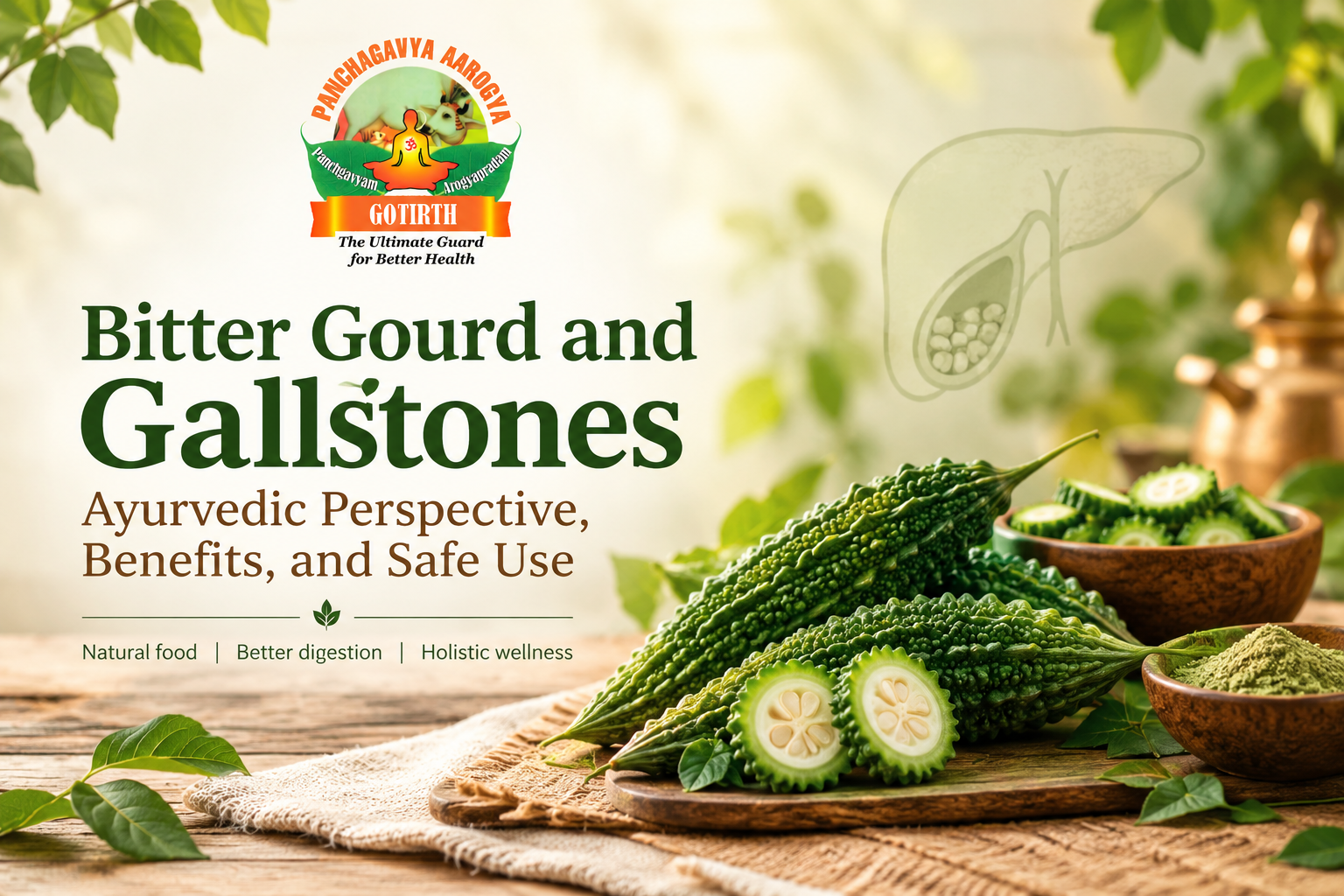
Bitter Gourd and Gallstones: Ayurvedic Perspective, Benefits, and Safe Use
Gallbladder health is essential for proper digestion, yet it often goes unnoticed until problems arise. Gallstones, also known as pitta kī thailī kī patharī, are hard deposits that can form inside the gallbladder. In some individuals, they may cause no issues, while in others, they can lead to stomach pain, nausea, and other digestive problems.
Ayurveda has long emphasized the importance of āhāra-vihāra—a balanced diet and healthy lifestyle—for maintaining good digestion. Among traditional Indian foods, bitter gourd (karela) is well recognized for its unique bitter taste and nutritional value.
But can karela help treat or dissolve gallstones? The answer requires a balanced view.
Although bitter gourd can be part of a nutritious diet, there is not enough solid clinical evidence to claim that it alone can dissolve existing gallstones. Therefore, it should be considered a supportive food, not a substitute for professional medical advice or prescribed treatment.
Understanding Gallstones
Gallstones are hard, pebble-like deposits that form inside the gallbladder, a small organ located beneath the liver. The gallbladder stores bile, a digestive fluid that helps the body break down fats.
These stones can develop when there is an imbalance in the substances that make up bile or when the gallbladder does not empty properly. Some people may have no symptoms, while others may experience sudden pain in the upper-right abdomen, nausea, or vomiting.
This is why it is important to understand the condition before trying any gharelu upāya or dietary approach.
Why Is Karela Considered Beneficial?
Karela, or bitter gourd (Momordica charantia), has been a common vegetable in traditional Indian diets for generations. Its naturally bitter taste and nutritional content make it a useful addition to a balanced eating pattern.
Here are some of its potential dietary benefits:
1. Supports a Balanced Eating Pattern
Bitter gourd can add variety to your everyday diet. Eating a wide range of vegetables, fruits, whole grains, and other fiber-rich foods is generally encouraged for digestive and overall wellness.
A healthy eating pattern is also relevant to gallstone prevention. A diet containing adequate fiber while limiting excessive refined carbohydrates and unhealthy fats can support better dietary habits.
2. Traditionally Valued for Digestive Wellness
In Ayurveda, bitter-tasting foods are traditionally associated with pitta balance and digestive wellness. Karela has therefore been included in traditional Indian dietary practices for many years.
However, traditional use should not be confused with proven medical treatment. If gallstones have already been diagnosed, dietary changes should support—not replace—appropriate medical evaluation.
3. Naturally Nutrient-Rich
Karela contains various nutrients and naturally occurring plant compounds. Including it as a vegetable in everyday meals can be a simple way to add more plant-based foods to your diet.
Its nutritional profile makes karela a valuable part of a varied and balanced diet, although it should not be viewed as a standalone treatment for gallstones.
Karela and Gallstones: What Does the Evidence Say?
This is perhaps the most important part of the discussion.
You may come across claims online suggesting that karela juice or karela powder can “melt,” “flush out,” or “dissolve” gallstones. Such claims should be approached with caution.
There is currently no reliable clinical evidence showing that bitter gourd can dissolve existing gallstones on its own.
For people searching for bitter gourd for gallstones, it is therefore important to distinguish between traditional dietary use and clinically established treatment.
Medical management of gallstones depends on whether the stones are causing symptoms and on the individual's overall condition. Some people with asymptomatic gallstones may not require immediate treatment, while symptomatic gallstones may require medical attention.
In simple words, sahī jānakaṛī matters: karela may be included as part of a healthy diet, but it should not be promoted as a guaranteed cure for gallstones.
How to Include Karela in Your Diet
If karela suits your taste and your healthcare professional has no concerns, it can be included in your regular meals in simple ways.
Karela Sabzi
Lightly cooked karela can be included as part of lunch or dinner. If you are aiming for a lighter, digestion-friendly meal, avoid excessive oil and deep-frying.
Karela as Part of a Balanced Meal
Rather than depending on karela as a single food for gallbladder health, consider including it alongside a variety of vegetables, whole grains, fruits, and other nutritious foods.
A balanced āhāra is more important than relying on one particular ingredient.
What About Karela Juice?
Karela juice is commonly discussed in traditional wellness practices. However, concentrated karela juice should not be considered a treatment for gallstones.
If you have been diagnosed with a gallbladder condition, consult a qualified healthcare professional before making significant dietary changes or regularly consuming concentrated preparations.
Diet and Lifestyle for Better Gallbladder Health
Karela is only one food. Overall dietary and lifestyle habits have a much greater role in supporting general health.
A well-balanced diet that includes vegetables, fruits, whole grains, and other fiber-rich foods can contribute to overall wellness. Reducing excessive sugar, refined carbohydrates, and unhealthy fats can also help promote healthier eating habits.
Maintain a Healthy Weight
Maintaining a healthy weight is important for overall health. However, extremely rapid weight loss and crash diets can increase the risk of gallstone formation.
A gradual and sustainable approach is generally preferable to extreme dieting.
In simple terms: “Slow and steady is better than quick fixes.”
Can Ayurveda Help With Gallbladder Wellness?
Ayurveda places strong emphasis on balance through āhāra (diet), dinacharya (daily routine), and individualized wellness practices.
For someone searching for Ayurvedic treatment for gallstones, it is important to understand that Ayurvedic care should be personalized according to the individual's condition. Consulting a qualified Ayurvedic practitioner alongside appropriate medical care can help ensure a safer and more informed approach.For those exploring Ayurvedic wellness options, you can also learn more about Gotirth Renol Liquid, formulated as part of a holistic approach to digestive and liver wellness.
Ayurvedic herbs or products should also be selected according to an individual's health condition, medical history, and current medications.
Most importantly, natural does not automatically mean risk-free. Gallstones can sometimes block the bile ducts and cause complications that require prompt medical attention.
When Should You See a Doctor?
Do not depend on home remedies if you experience severe or persistent symptoms.
Warning Signs That Need Medical Attention
Seek medical attention if you experience:
-
Severe or persistent abdominal pain
-
Repeated vomiting
-
Fever or chills
-
Yellowing of the skin or eyes (jaundice)
-
Significant discomfort after meals
These symptoms may indicate a gallstone-related complication and should not be ignored.
How Are Gallstones Diagnosed?
Diagnosis generally involves reviewing your medical history, performing a physical examination, and using appropriate imaging tests, such as an abdominal ultrasound.
Treatment depends on factors such as the presence of symptoms, the type of gallstones, possible complications, and your overall health.
Final Thoughts
Karela is a traditional Indian vegetable that holds an important place in home food and Ayurvedic dietary traditions. Its nutritional qualities make it a useful addition to a balanced lifestyle, but it should not be presented as a scientifically proven cure for gallstones.
For people searching for gallbladder stone natural remedies, the most responsible approach is to combine healthy dietary habits with appropriate medical evaluation.
Karela can be one part of a balanced lifestyle—but it should not replace professional diagnosis or necessary treatment.
Ultimately, prakriti ke sāth santulan—living in harmony with healthy natural habits—can be valuable, but informed health decisions are equally important.
If you have been diagnosed with gallstones or are experiencing persistent digestive or abdominal symptoms, consult a qualified healthcare professional before starting any new herbal remedy, concentrated juice, or dietary regimen.


